
Employee Engagement Through a Different Lens: What if the Missing Piece is the understanding of Mental Toughness?
EW
Gallup's Singapore Workplace Report 2026 revealed a concerning statistic: only 14% of employees in Singapore are engaged at work, and among employees under 35, the number falls to just 10%. That means 9 out of 10 young employees are not fully engaged in their work. [gallup report], [straitstimes.com]
The immediate reaction is often:
"It's a Gen Z issue."
"Young people just don't want to commit."
"This generation has different expectations."
But is this really a generational problem?
Or are we looking at the wrong thing?
What Does "Engagement" Actually Mean?
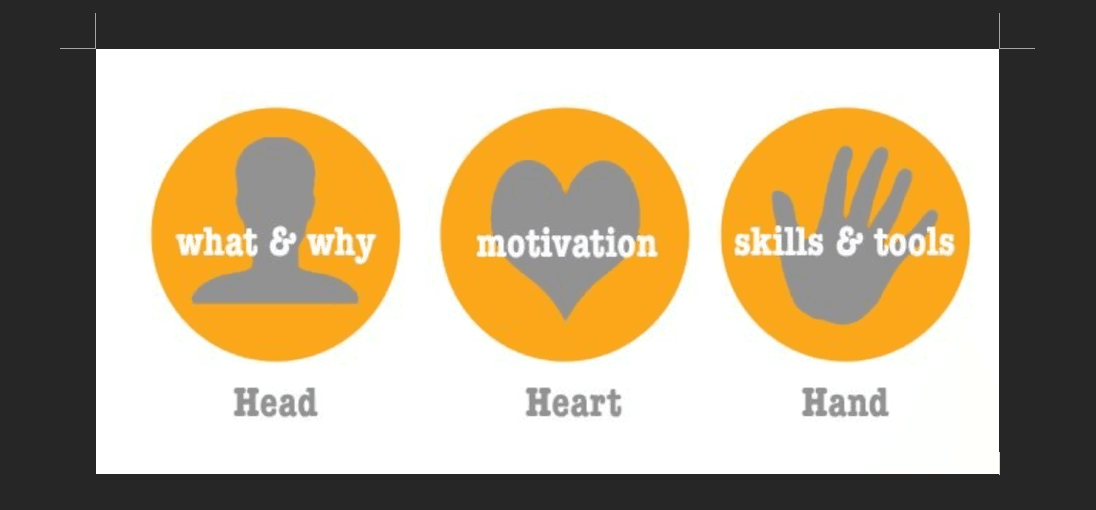
When discussing engagement, I often use a simple Think Feel Act (Head+Hands+Heart) framework:
Think - The Head
"I need the job."
Employees understand their responsibilities. They know the goals. They need the salary and benefits.
Act - The Hands
"I will do what's required."
Tasks are completed. Deadlines are met. Performance is acceptable.
Feel - The Heart
"I feel connected and I want to contribute."
This is where discretionary effort lives.
Employees care about outcomes. They want to make a difference. They are willing to go beyond the minimum because they feel connected to the work, the team, and the purpose.
Most disengagement is not about losing the Head or the Hands.
It is about losing the Heart.
The Engagement Challenge Is Really a Motivation Challenge
When employees are mentally checked out, leaders often respond with:
• Better perks
• More benefits
• Team bonding activities
• Salary adjustments
These are useful, but they mainly address extrinsic motivation.
The real question is:
What drives someone to care?
Research on intrinsic motivation consistently points to four drivers:
1. Relatedness – feeling connected to others
2. Autonomy – having ownership and choice
3. Mastery – growing capability and competence
4. Purpose – working towards something meaningful
These are precisely the areas where Mental Toughness becomes highly relevant.
Mental Toughness: A Missing Variable in Engagement
Traditionally, Mental Toughness has been associated with resilience, stress management, and performance.
However, the framework offers another powerful perspective:
Mental Toughness influences the conditions that create intrinsic motivation.
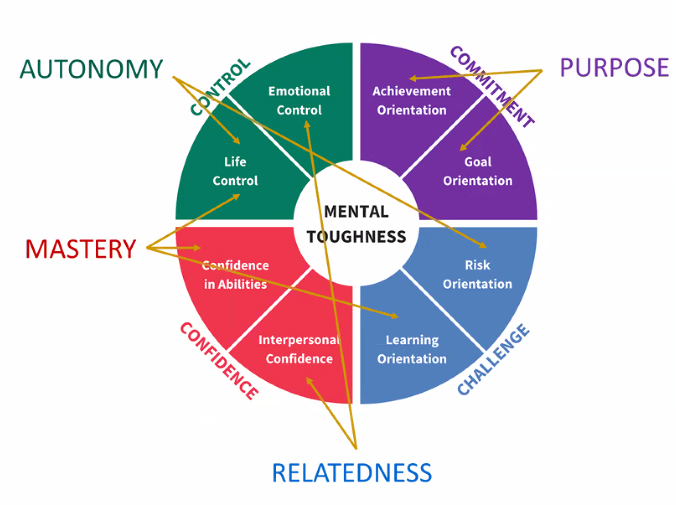
The latest MT research maps several Mental Toughness factors directly to the key drivers of intrinsic motivation.
1. Relatedness → Interpersonal Confidence + Emotional Control
Employees are more engaged when they feel connected and psychologically safe.
People with stronger Interpersonal Confidence are more likely to:
• Speak up
• Build relationships
• Seek support
• Contribute ideas
Emotional Control helps individuals manage tension, conflict, and workplace stress without withdrawing.
Without these capabilities, employees may remain physically present but emotionally disconnected.
2. Autonomy → Life Control + Risk Orientation
Engagement increases when people feel they have agency.
Employees who possess higher levels of Life Control tend to believe:
"My actions matter."
Rather than feeling like victims of circumstance, they see themselves as active contributors.
Risk Orientation also matters.
Innovation, initiative, and ownership require employees to step into uncertainty.
When individuals fear making mistakes, autonomy shrinks.
When they feel safe taking calculated risks, engagement grows.
3. Mastery → Confidence in Abilities + Learning Orientation
One of the strongest predictors of engagement is the belief that:
"I am getting better."
Employees who are confident in their abilities and motivated to learn are more likely to:
• Embrace challenges
• Seek feedback
• Stretch themselves
• Persist through setbacks
Conversely, when people doubt their capability, they often become disengaged as a form of self-protection.
What looks like apathy may actually be a confidence issue.
4. Purpose → Goal Orientation + Achievement Orientation
Engaged employees see a relationship between effort and meaningful outcomes.
Goal Orientation provides direction.
Achievement Orientation provides energy.
Together, they answer two critical questions:
• Where am I going?
• Why does it matter?
Purpose is not something leaders simply communicate during a town hall.
It is something employees experience when their goals, strengths, and contributions align.
So Is It Really a Generational Problem?
Gallup's report suggests that younger employees experience significantly higher levels of stress and lower engagement than older workers. The report argues that this is less about character and more about conditions.
From a Mental Toughness perspective, we might ask different questions:
• Do young employees feel a sense of control?
• Do they feel confident enough to contribute?
• Do they have meaningful goals?
• Do they feel connected to their leaders and teams?
• Do they see opportunities to learn and grow?
These are not generational questions.
These are psychological questions.
And they are highly developable.
What This Means for Leaders
If engagement is fundamentally about winning hearts - not just securing hands and heads - then leaders must go beyond surveys and benefits.
We need to understand the psychological drivers behind engagement.
The Mental Toughness framework provides a practical, evidence-based lens to do exactly that.
Instead of asking:
"How do we make employees more engaged?"
Perhaps we should ask:
"How do we create the conditions for greater confidence, control, connection, learning, and purpose?"
Because when people develop these qualities, engagement stops being something we try to drive.
It becomes a natural outcome.
And perhaps that is where the future of employee engagement lies.
Questions for Leaders
Are your employees engaged with their heads, hands, and hearts?
Which aspect of intrinsic motivation is most lacking in your team today?
Could Mental Toughness be the missing link between engagement surveys and meaningful behavioural change?
#MentalToughness #EmployeeEngagement #LeadershipDevelopment #FutureOfWork #IntrinsicMotivation #MTQ #Leadership #PeopleDevelopment #OrganisationalCulture #HRLeadership
About Echo Wu
I’m Echo Wu, a leadership coach and mental toughness master practitioner based in Singapore. After years in corporate HR and executive development across Asia Pacific, I now work with executives, entrepreneurs, and their teams to elevate performance, navigate change, and achieve their goals with resilience and positivity.
Whether you’re building something bold, navigating uncertainty, or simply craving space to think differently, I’d love to hear from you.
More at ECHOleadershipgroup.com
Acknowledgment: The Mental Toughness foundation of this model is informed by AQR International's research and presentations.